Dead Ahead: Zombie Warfare
- 4.5
- Rating
- 10.00M
- Installs
- Free
- Price
 Analysis by App-foxy
Dead Ahead: Zombie Warfare is the kind of strategy game I can open for a short break and still find myself making careful decisions several minutes later. It puts a zombie-survival theme around lane-based battles, but the appeal is less about simply sending units forward and more about deciding when a push is worth the risk. I played it as a free game from Mobirate, and my first impression was that it asks for attention without demanding the long sessions associated with many larger strategy titles.
The basic idea is easy to understand: survivors face the undead, resources are limited, and every deployment affects what happens next. That simplicity makes the game approachable, while the pressure comes from learning which decisions are safe and which only look safe. It is listed as a Teen game, and the tone fits that rating through its zombie conflict rather than through a complicated presentation.
What kept me interested was the way a seemingly small mistake can change the shape of a battle. Sending a unit too early may leave a later wave unchecked, while waiting too long can allow the enemy to gain ground. I would not call it a relaxing idle experience. It is better suited to players who enjoy short tactical problems and do not mind repeating a difficult encounter to understand its rhythm.
You May Also Like

 Blood Strike: 2.5 Anniversary
Blood Strike’s Loadouts Turn Every Drop Into a Tactical Gamble
A close look at Blood Strike’s custom loadouts: how fast access to signature weapons reshapes its battle royale rhythm, rewards preparation, and narrows the gap between fights.

 Pandora - Music & Podcasts
Pandora’s Music Is Easy to Start, but Harder to Recover
Pandora’s strength is its low-effort path from a seed to a station. Its weak spot is how much confidence it asks you to place in connection, setup, and quiet recovery.

 8 Ball Pool
 Is Built on Rivalries, Rematches, and Routine
A close look at the rivalries, rematches, shared routines, and unanswered safety questions that turn a quick pool match into a persistent mobile community.

 Samsung Music
’s Quiet Strength Is Playing What You Already Own
Its reach comes less from spectacle than from dependable access to a personal library. That simplicity is both the app’s strongest retention engine and its ceiling.

 AccuWeather: Weather Radar
AccuWeather Review: A Quick, Clear Forecast for Everyday Decisions
For everyday plans, the best forecast is the one you can understand quickly. AccuWeather makes rain timing, radar, and local conditions easy to act on, with a few trade-offs.

 Hill Climb Racing
Why Hill Climb Racing Still Turns Crashes Into One More Run
A tiny car, a bumpy hill and one more upgrade: Hill Climb Racing keeps resurfacing because its simple chaos makes every near-miss feel personal.
More From Our News Desk



How the battlefield turns simple choices into real pressure
I find the battlefield most interesting when a small choice has consequences beyond the moment: spending early can steady a push, but it may leave fewer ways to answer the next threat. That pressure rewards a pause to read the situation rather than a string of quick taps. In the next section, I’ll look at how that decision-making shapes the pace of play and what to expect from a short session.
A strategy game built around timing rather than a giant rulebook
The game belongs firmly in the strategy category, but it does not bury the player under a huge number of systems at the beginning. I found its strongest quality in the timing of decisions. You are constantly weighing immediate survival against the value of saving resources for a stronger response. That creates a useful tension: a unit that looks ideal right now may be the wrong choice if the next threat arrives before you can recover.
This makes each attempt feel more deliberate than the store summary might suggest. The zombie setting gives the action urgency, but the real challenge is reading the lane and recognizing when the battle is about to change. I learned to stop treating every available deployment as an invitation. Sometimes the best move is to wait, observe how the opposition advances, and spend only when the opening is meaningful.
That habit is one of the first practical tips I would give a new player: do not empty your options simply because the screen allows it. Keeping a response available is often more valuable than creating a crowded frontline. This is especially useful when a battle appears to be going well, because overconfidence can leave you without a way to answer the next push.
Why repeating a stage can be useful instead of pointless
When I failed, the loss usually gave me something to study. I could identify whether I had acted too quickly, protected the wrong position, or misunderstood the order in which threats became dangerous. That makes replaying more constructive than repeating a level with no change in approach. The game rewards observation, not just persistence.
There is also a practical difference between a player who experiments and one who simply repeats the same sequence. If a particular deployment keeps collapsing, I would change one decision at a time rather than rebuilding the entire approach. That makes it easier to see what actually helped. It is a small workflow, but it prevents the common mobile strategy habit of tapping through a level without learning anything.
My advice is to treat early attempts as scouting runs. Notice where pressure starts, which response buys time, and whether saving resources creates a better second half. Once I began thinking this way, difficult encounters felt less random. They still demanded a good attempt, but the challenge became more understandable.
Progress feels rewarding, but it can also create friction
Progression is part of the motivation, yet it also creates the main source of pressure. A successful run encourages you to continue, while a setback can make you wonder whether you need a better plan or more progress elsewhere. That uncertainty is common in free strategy games, and it is where patience matters most.
I would not recommend rushing to spend money simply because a stage stops you. First, change your formation or timing, replay earlier content, and check whether the problem is a tactical mistake. In my experience, a purchase should feel like a deliberate choice to support the game, not an automatic response to frustration. The free entry point makes that approach possible because you can decide whether the core loop is enjoyable before paying.
The game includes in-app purchases ranging from $0.99 to $104.99 per item. That is important context for anyone who wants a completely controlled spending environment. The range means I would be careful with one-tap purchasing, especially if a younger player uses the device. The Teen rating does not change the need for sensible purchase controls.
What the spending model means for a careful player
I can discuss the purchase structure clearly, but I would not claim that a particular item is necessary or that every player will hit the same wall. The available purchase range tells me that optional spending is a meaningful part of the product, while it does not by itself prove how quickly a non-paying player progresses or how individual purchases affect balance. I prefer to keep that distinction clear rather than turn assumptions into facts.
For someone trying to avoid spending, I would set a personal rule before starting: play long enough to decide whether the battles themselves are enjoyable, and do not buy during a frustrating loss. That separates genuine appreciation from impulse. For someone comfortable paying, the same rule is useful because it keeps the purchase connected to enjoyment rather than pressure.
The free price is a real advantage for testing the game. You can see whether its lane-based decisions suit you without committing money at the start. The trade-off is that the purchase range makes it less appropriate for a child’s unsupervised device or for anyone who dislikes games where optional spending is visible during progression.
Fairness is easiest to judge through your own play style
Competitive fairness needs a little care here. I would not describe this as a traditional head-to-head competitive game based on the information available about its store presentation, and I would not invent a ranking system or claim that purchases guarantee victory. What I can say is that the important question for a player is whether the tactical loop remains satisfying when progress slows.
If you mainly want a fair contest against other people, a dedicated multiplayer strategy game may be a better choice because its balance can be judged through direct player-versus-player rules. Dead Ahead: Zombie Warfare appeals more to me as a personal tactical challenge: I am trying to improve my decisions against the game’s situations rather than prove that my account is stronger than someone else’s.
That distinction changes how I evaluate spending. In a competitive arena, purchases can feel especially uncomfortable if they create a direct advantage. Here, my concern is different: whether the pressure to progress interrupts the pleasure of solving encounters. Players who enjoy solo improvement may tolerate that tension more easily than players who want a clean, purely skill-based competition.
Three habits that make the experience more manageable
First, I would avoid using every available option at the start of a battle. Holding something back gives you room to respond when the situation changes. This is more useful than trying to create immediate momentum in every encounter.
Second, I would replay a difficult stage with a single question in mind. Instead of asking why the whole attempt failed, ask which moment first made recovery unlikely. That usually points to a better adjustment than simply choosing stronger-looking units or repeating the same sequence.
Third, I would separate progression sessions from spending decisions. If I am tired or annoyed, I stop rather than purchase. The game’s free starting price makes this easy: there is no need to decide immediately whether it deserves financial support. Those three habits do more for my enjoyment than chasing a perfect run from the beginning.
Where it fits among other mobile strategy games
Compared with large base-building strategy games, this feels more focused. I do not approach it expecting a broad empire-management experience, long-term social planning, or a huge map to supervise. Its attraction is the compact battle decision: what to deploy, when to wait, and how to recover from a bad exchange.
Compared with idle zombie games, it also asks more from me. I cannot simply leave progress running in the background and expect the same satisfaction. The useful decisions happen during play, so someone looking for a passive collection experience may prefer another option. On the other hand, players who find idle systems too hands-off may appreciate having a direct role in survival.
It is also different from a fast arcade zombie game. The undead theme may suggest constant action, but my enjoyment came from planning and restraint rather than reflexes alone. If you want rapid shooting and immediate controls, this may feel slower than expected. If you like turning a limited set of choices into a successful defense, the pace makes more sense.
A realistic everyday session
Imagine having a short break between errands. I would open the game expecting to try one encounter, study the opening pressure, and decide whether I had enough attention for another attempt. A successful run can fit that kind of pause, while a difficult stage may tempt me into continuing longer than planned because I now understand what went wrong.
That is both a strength and a weakness. The compact structure makes it convenient for mobile play, but the retry loop can quietly extend a short session. I would not start it when I need to leave immediately or when I am trying to avoid anything mentally engaging. It works better during a break where I can stop after an attempt without feeling that I must finish the next challenge.
For a family device, I would also check the purchase settings before handing it to a younger player. The Teen content rating and the presence of purchases make supervision sensible. For an adult who wants a free strategy game with optional spending, the same facts are simply part of deciding whether the model fits personal preferences.
Device expectations and practical commitment
The listed minimum operating system is Android 7.0, which makes the game accessible to a wide range of Android users with older supported software. I would still judge the experience on the actual phone rather than assume that every device feels identical. Strategy games depend on readable controls and a comfortable screen, and a small display can make careful decisions less pleasant even when the software runs.
The current version is 4.4.2, so I would keep the app updated when possible, especially if I encounter a technical issue. I would not promise that an update solves every problem, but using the current version is the sensible first step before deciding that the game itself is at fault.
Its scale is also worth noting: the game has passed 10 million installs, with an average rating of 4.5 from around 881 thousand ratings and roughly 43 thousand written reviews. Those figures suggest a substantial audience and a generally positive reception, but they do not replace personal testing. A popular game can still be the wrong fit if its spending model or repeated tactical structure bothers you.
Who should give it a chance, and who should skip it
I would recommend it to players who enjoy zombie themes but want more than tapping through a passive survival loop. It suits people who like learning from failed attempts, managing limited choices, and making progress through better timing. It is particularly appealing if you prefer a focused strategy session over a sprawling management game.
I would be more cautious recommending it to anyone who dislikes retries, visible purchase options, or progression that can create pressure. It is also not my first choice for someone seeking a social competitive environment, a pure reflex game, or a completely hands-off idle experience. Those players may find a specialized alternative more satisfying.
The game is free to start, which lowers the risk of trying it. Still, I would approach the purchase range thoughtfully and decide in advance whether optional spending is acceptable. The best experience, in my view, comes from treating purchases as voluntary support rather than as the expected solution to every difficult encounter.
My trust verdict after weighing the good and the uncomfortable
Dead Ahead: Zombie Warfare earns my recommendation as a focused mobile strategy game, not because it removes every source of friction, but because its battles give small decisions real weight. Mobirate has built a zombie game that works best when I slow down, observe the pressure, and improve one choice at a time.
I trust it as a free game to try, with two clear cautions: the Teen rating matters for younger users, and the in-app purchase range deserves deliberate controls. I also would not pretend that the available store facts answer every question about progression speed or competitive balance. Those are areas where each player should judge the experience through actual play rather than rely on confident claims.
My final advice is simple. Install it if you want compact survival strategy and are comfortable with a retry-based challenge. Give it a fair trial without spending, use failed battles as information, and stop if the pressure becomes more noticeable than the fun. For me, that balance is what makes the game worth recommending: it offers enough tactical depth to reward attention, while remaining easy to test before making any financial commitment.
FAQs for Dead Ahead: Zombie Warfare
01What is Dead Ahead: Zombie Warfare?
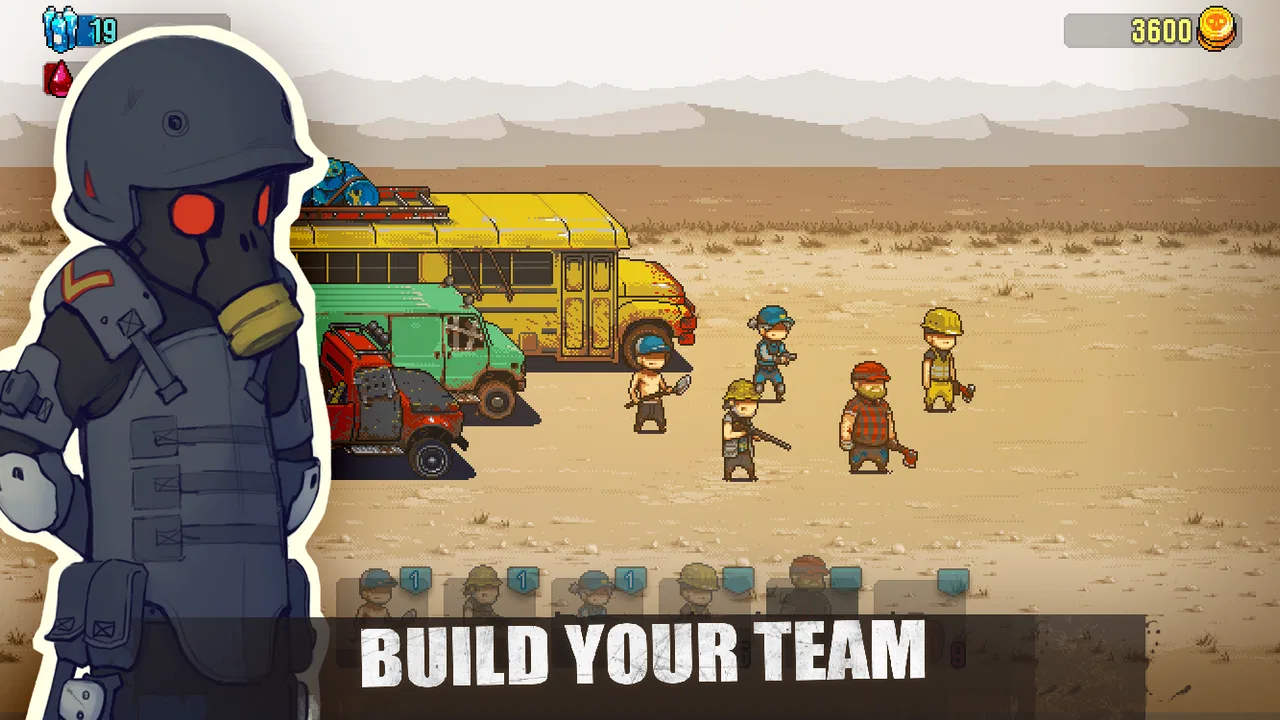
Dead Ahead: Zombie Warfare is a post-apocalyptic strategy game for Android and iOS in which you lead a group of survivors through a world overrun by zombies. You deploy characters on the battlefield, manage resources, complete missions, unlock new units, and defend your bus while traveling between dangerous locations. It combines lane-based combat, squad management, exploration, and light role-playing progression.
02Is Dead Ahead: Zombie Warfare free to download and play?
Yes, Dead Ahead: Zombie Warfare can generally be downloaded for free, but it includes optional in-app purchases. You can progress without paying, although upgrading survivors, collecting resources, and completing certain objectives may take time. Players should also expect advertisements or other monetization elements depending on the platform and current version. Checking the store listing before downloading is recommended for the latest purchase details.
03Does the game require an internet connection?
Many parts of Dead Ahead: Zombie Warfare may be playable offline, which makes it convenient for short sessions while traveling or when mobile data is unavailable. However, an internet connection can be required for advertisements, cloud-related features, updates, purchases, events, or certain online services. Because requirements can change after updates, it is best to launch the game online at least once and review its current behavior.
04Is Dead Ahead: Zombie Warfare suitable for children?
The game uses cartoon-style graphics, but its central theme involves zombies, combat, weapons, blood effects, and survival in a dangerous post-apocalyptic setting. It may be acceptable for older children or teenagers depending on a family’s preferences, but it is not designed as a completely child-friendly experience. Parents should check the age rating, in-app purchase settings, advertising content, and device controls before allowing younger players to download it.
05What should new players know before starting Dead Ahead: Zombie Warfare?
New players should expect a game that rewards careful resource management rather than simply deploying units as quickly as possible. Team composition, unit abilities, timing, and positioning are important, especially when facing stronger zombies or limited battlefield space. Save valuable resources for useful upgrades, learn each survivor’s role, and avoid spending premium currency impulsively. Progress can also become slower later, so patience is helpful.
Pros
- Strategic lane-based battles are easy to learn but offer meaningful tactical choices.
- Distinct survivor classes make team composition important and rewarding.
- Frequent events and challenges add variety beyond the main campaign.
- Stylized graphics give the zombie apocalypse a memorable visual identity.
- Short missions work well for quick gaming sessions on mobile.
Cons
- Energy limits can interrupt play and encourage waiting between missions.
- Upgrading survivors and vehicles becomes increasingly resource-intensive.
- Random loot may make progress feel inconsistent for some players.
- Later levels can rely heavily on grinding or carefully optimized teams.
- Some menus and mechanics take time to understand without clear guidance.

Dead Ahead: Zombie Warfare
Gallery